Children's Health · Health and Wellness · Kids Books · Lifestyle Changes · Parenting

Reviving Kids’ Love for Reading and Health

Only 1 in 3 kids, aged 8-18, say they enjoy reading in their free time. Reading — for enjoyment — is at its lowest point in 20 years. Interestingly, children’s overall health is also at it’s lowest point. (54% of US kids have at least one chronic disease)

This should come as a “canary in the coal mine” warning for parents, teachers and… children’s authors.

Furthermore… according to the National Literacy Trust… many children associate reading with endurance rather than enjoyment. Reading! A drudgery! How is that even possible?

Additionally, it’s not only about how often kids read. It’s more about a lack of motivation and emotional connection with books.

Again—as an early warning—kids losing their love for fiction indicates a larger, more serious problem. Could this issue parallel their general declining energy and health?

Question: Why is this growing lack of interest in reading, and declining health among today’s youth happening now?

Too Much Screen Time
  • Digital influences are constant distractions for kids.
  • Bite-size posts and videos provide instant gratification
  • Reading – by comparison – seem tedious and less stimulating
  • To Do: Provide structured environment. Set daily limits, establish screen-free zones (before bed, during meals, face-to-face conversation), physical screen-free-zones (kid’s bedroom), stop non-stop background TV. Encourage new habits. Promote hobbies, sports, encourage reading time. Plan family time, and get outdoors.
Too Hard to Connect With Literary Content
  • Reading feels like schoolwork
  • Books might not connect with their interests
  • Books mean searching and searching takes time and effort
  • To Do: Help kids find books on topics they like. Read aloud, even as they get older. Use, but limit time spent on audiobooks to build vocabulary.
Too Difficult/Too Frustrating
  • Reading requires comprehension and can be embarrassing or frustrating for kids who do not reach their age levels
  • Feeling overwhelmed if content is too complex for their reading abilities
  • Feel defeated before they even start
  • To Do: Let kids pick books they enjoy. Set up a quiet time to read with them. Do not criticize. Instead, celebrate achievements regardless how small. If possible create a comfortable reading space.
Too Busy
  • Kids have schedules and extracurricular activities that compete with reading time
  • Homework takes up valuable time away from reading for enjoyment
  • To Do: Keep interesting books handy. Encourage some reading as part of the bedtime routine. Use car rides as an opportunity to read. Model reading as an enjoyable moment in an otherwise busy day.

Then Factor In The Need for Kids’ Health Awareness

If we want children to understand the chronic diseases that might affect them… Then guess what? Reading is involved. Yikes.

Parents, teachers, and children’s authors must-of necessity-become much more creative.

If regular fiction is BORING and a CHALLENGE to one third of today’s kids, then how can health-awareness fit in?

Additionally, where would fitness guidance, in book-form, fit in?

To Do: Support a Developing New Genre of Fiction for Kids: Health-focused Kid Heroes

Introducing Suzanne Rightley’s Kid Heroes…
Brea

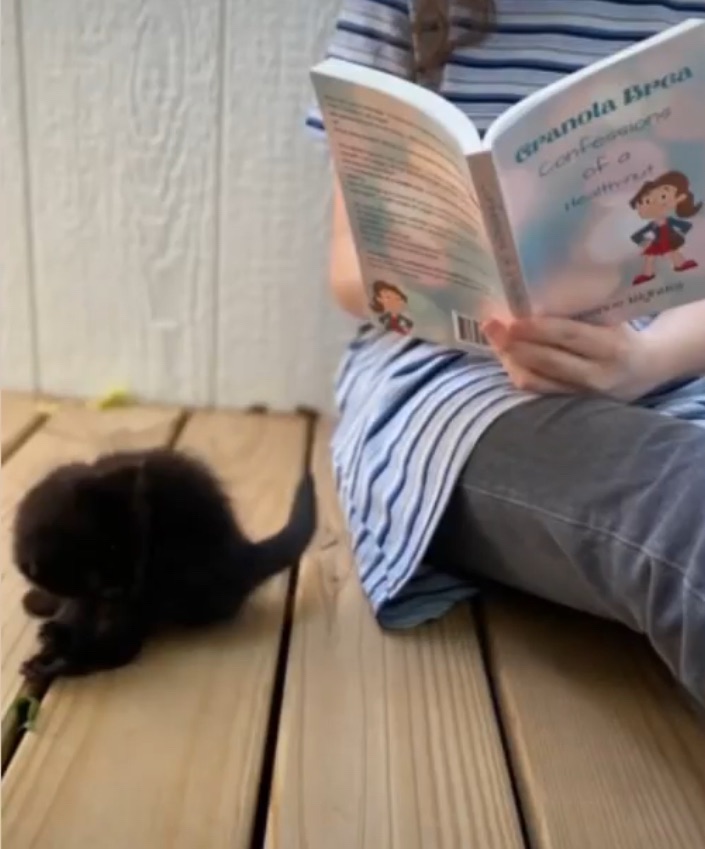
Brea, aka Granola Brea, is a 12-year-old girl who is driven by health. She aspires to become a consumer advocate when she grows up. In the meantime – she keeps busy. She writes a monthly article for her local paper. Brea holds a summer job as a camp nutrition counselor for at-risk teens. She also hosts a kids health-based podcast.

Find Brea’s Books on Amazon: Granola Brea Health-nut Series; The Granola Experience

Nevin Smarts

Nevin, aka Nerdy Nev and/or Smartypants (not his preferred nickname for obvious reasons). Nev has a high IQ. He has several distinct goals, all of which sees him attending university for a few years. In the meantime, high school is providing practical experience in promoting health to his peers. Is it smooth-sailing? Ah… not so much, but nothing keeps this health-nerd down.

Learn more about Nevin on Amazon: “Ask a Nerd” Smarts Health; “Ask a Nerd” Smarts Health Habits

Maxine

Maxine, aka Maxie is dedicated to nutrition and fitness… and for good reason. She’s healthy now – thankfully, but that wasn’t always true. Her story is in developing stages as this blog is being written. Stay tuned for her first book in 2026.

Learn more about Suzanne’s books on her author page.

Children's Health · Freedom of Expression · Parenting

The Role of Adults in Children’s Health: Instinct or Controversy?

Unhealthy children, and the longstanding, natural ability of adults to observe the signs and symptoms is on the hot seat.

Why? When did observing children’s behavior and signs of illness become controversial?

Haven’t adults always played a quiet role in safeguarding children – through instinct, observation, and care?

I don’t know when it happened, but somewhere along the way, noticing things became controversial. Huh? Especially when it comes to children. Really?

On a personal note: my first thought is my own mother. I’m glad she noticed when something was wrong and kept me home from school.

Then there were the teachers. Yeah – I think they can spot a child who is unhealthy. Thankfully, most teachers care enough to inform the parent.

That all seems normal to me.

People have been observing kids forever and making decisions along the way. Consider that children depend on adults for guidance. Adults explain the reasons they need woolly hats and mitts in the winter. They explain why children should drink extra water on hot days. Adults also ensure they look both ways before crossing the street.

But things are different now. Apparently.

Lately, even the most basic observations about children’s health seem to spark controversy.

Recently, Robert Kennedy noted that children don’t look as healthy as they used to. Gasp. He observed obese kids at the airport. Gasp. He noticed they were fixated on their devices. Gasp.

What nerve!

How dare he!

But, don’t worry… the dedicated mainstream news pointed out his outrageous behavior. They very clearly pointed out that Mr. Kennedy is NOT a medical doctor.

Maybe, the rest of us – observant adults better take heed. We are, after all, just regular folk. No medical degrees either. Gasp! We might have some common sense – but, that doesn’t count. As. We. All. Know!!!

Hi… My name is Suzanne. I write middle-grade health fiction stories. I aim to encourage kids to make better, healthier choices for themselves through light and lively narratives.

The topics covered are serious – as they relate to chronic childhood diseases – however, the format is entertaining.

Through humour, outrageous predicaments, and… ah… a few health nerdy clashes, children learn about the issues. Most importantly, they learn how they can improve their own health habits.

To learn more about my books visit my author page on Amazon.

Children's Health · Parenting · Responsible Parents

Listening to Kids: What They Say and Don’t Say

Hearing what kids say, and what they don’t say, is an important aspect of parenting.

What’s really going on?

When children first start speaking, parents are thrilled. They catch every new word (even when adoringly mispronounced) and they share their joy with … just about everyone they know and – considering TikTok, Instagram, Facebook, and etc., a whole lot of people they don’t know.

As time goes on, those wonderful first words turn into a lot of chatter, and chatter, and even more chatter.

Somewhere along the way, many parents sorta tune out some of the gibber-jabber. It’s not hard to understand why. A child’s repetitive chatter is well… repetitive.

But parents should not relax when it comes to listening to their children. As their child’s world broadens, so do the influences – both positive and negative.

From neighborhoods, to schools, after school activities and… of course, let’s not forget their friends… children face many situations.

So yes, parents cherish their baby’s first words. They’re extremely attentive. As they should be.

But, as time speedily moves on, parents need to be even more vigilant about their child’s expanding world.

The harmless chatter from toddlers and preschoolers can change suddenly. This can happen overnight, if parents do not keep their listening skills sharp.

As a responsible parent, you want to tune into the things your kids don’t (or maybe can’t) put into words. To do…

Sharpen Your Listening Skills

Catch What’s Missing
  • Sudden changes in your child’s interests/routines: If circumstances don’t seem to justify the reasons… then their wish to change a formerly cherished hobby may show something has become uncomfortable for them. Refusing to go to places they used to love may also signal discomfort. This discomfort might be causing anxiety.
  • When they avoid certain topics: Watch for kids who dodge questions about their friends, school, or even their feelings. This behavior may mean that something is amiss.
  • Becoming unusually quiet: Children tend to talk a lot about… everything. If that changes, and they become withdrawn, it may indicate they don’t know how to express their concerns.
Key body language cues to look out for
  • Facial expressions: If the expression on their faces doesn’t match their words, it can be a sign. They might not be truthful. A blank stare or a forced smile when they claim they are okay might indicate this.
  • Defensive posture: A child who fidgets, crosses their arms, or turns away from you may indicate they are withdrawing. This behavior may signal that something or someone is causing them discomfort or worry.
  • Attitude changes: emotional stress may be expressed as either sudden need for independence or excessive clinginess.
Listen to word choice & tone of voice
  • Vague: A child who says “I don’t care” or “whatever” might mean the exact opposite.
  • Too apologetic: Self-blame might mean a growing low self-esteem or they don’t want to disappoint you.
  • Joking about serious things: Humour can be a cover for insecurity.
What To Do Next…

As a concerned parent, you may have heard some of the following suggestions… “Validate your child’s feelings without telling them what to do.” (That makes sense.) “Ask open-ended questions to give your child the opportunity to fill in the blanks.” (Yeah, another good one.)

You could probably list several yourself.

But the big takeaway should be found within a parent’s attitude and commitment.

As children grow, they struggle to ‘fit in’ to their surrounding world. They might come across as being unreasonable or argumentative. They can also appear frustrated, etc. Parents often take the hit and trying to navigate through it, is similar to crossing a landmine.

The smart parent will understand and NOT take any outbursts as PERSONAL. They realize that all the ups and downs are part of that all important process we typically call… growing up.

In hindsight, those earlier toddler and preschool years were, not only wonderful, but much easier. However, remind yourself (repeatedly) that the ‘growing up’ years are also wonderful.

Strive to become a parent who understands. Allow your child the time they need to establish a firm footing in the world. You’re there to help when it’s necessary and … guess what … your child knows it.

Now… whether or not you should trust their friends, school, neighborhoods, etc… Not so much. Be vigilant and remember to listen to what your child is not saying. They may need you to step in with a few tips here and there along the way.

Suzanne writes fiction for kids 10-14. Her latest efforts target kids’ health and wellness. If you, or someone you know, are interested in lively health-focused narratives,for the children you care about, then visit her author page on Amazon.

Thanks for the visit.

Children's Health · Health and Wellness · Kids Books · Nutritional Health

Understanding Insulin: A Kid’s Guide by Nevin Smarts

“Ask a Nerd” (Nevin) Smarts Health Books, by Suzanne Rightley, inspire kids to make better choices. These books help kids make healthier decisions as they explore the topic of insulin. Targeted for ages 10-14, children seamlessly learn important facts about this crucial hormone.

Parents and teachers will appreciate the health-based content. Kids will enjoy the hero in the stories.

Nevin Smarts is a nerdy fifteen-year-old boy. He faces many challenges in promoting healthy choices.

About the Nevin SmartSeries

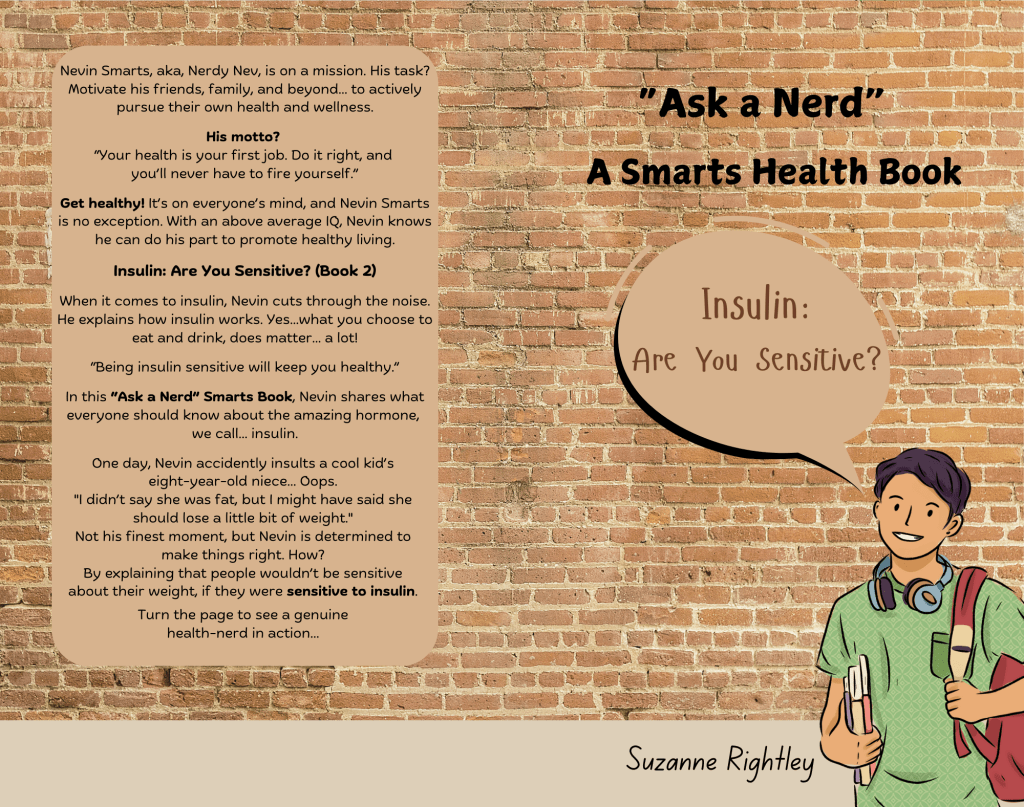
Nevin Smarts, aka, Nerdy Nev, is on a mission. His task? Motivate his friends, family, and beyond… to actively pursue their own health and wellness.

His motto? 

“Your health is your first job. Do it right, and you’ll never have to fire yourself.”

Get healthy! It’s on everyone’s mind, and Nevin Smarts is no exception. With an above average IQ, Nevin knows he can do his part to promote healthy living.

Insulin: Hero or Villain (Book 1, kids 10-14)

Cover sleeve – Book available on Amazon

Book 1 – Insulin: Hero or Villain

When it comes to insulin, Nevin cuts through the noise. He explains how insulin works. Yes…what you choose to eat and drink, does matter… a lot!

“Do you want insulin to be your friend or your enemy?”

Great Question! In this “Ask a Nerd” Smarts Book, Nevin shares what everyone should know about the amazing hormone, we call… insulin.

One day, Nevin is asked…”What’s up with insulin?”

Not the most brilliant question he’s ever heard, but regardless, Nevin is thrilled, and ready, to face the challenge.

Insulin: Are You Sensitive? (Book 2, kids 10-14)

Cover sleeve – Book available on Amazon

Book 2 – Insulin: Are You Sensitive?

One day, Nevin accidentally insults a cool kid’s eight-year-old niece…Oops. “I didn’t say she was fat, but I might have said she should lose a little bit of weight.”

Not his finest moment, but Nevin is determined to make things right. How? By explaining that people wouldn’t be sensitive about their weight, if they were sensitive to insulin.

“Ask a Nerd” Smarts Health Books can be found on Amazon. For more books by Suzanne Rightley, including Granola Brea, Health-nut Series, visit her author page.

If you are worried about children’s health and want to take action, check out Suzanne Rightley’s health-based fiction books. These books offer friendly ways to share health information. Humour and lively narratives are an added bonus.