
Lifestyle Changes · Parent and child relationships · Parenting · Quality Time with Children

Enjoy Quality Time With Your Children

Time flies. Right? Before you know it, your precious youngsters are going to school, then college, then work, then… they visit you.

These are wonderful days. It may be challenging, but do not allow life’s stresses to steal quality time with your children.

To do so requires self-examination and of course… planning.

  1. Know yourself – a little time to reflect on your current lifestyle is crucial. What are the triggers that easily throw off your best intentions. For many parents the distractions come from their phones. Notifications, by design, are set up for the receiver to take immediate action. The reality is – they can be ignored. Your child, on the other hand, should not be ignored if ‘quality time’ is your objective. Think – “I can mute my phone. I cannot mute my child.” It’s a priority thing.
  2. There are times when you and your child’s plans are interrupted for legitimate reasons – someone knocks on the door, it’s the courier. Will this interruption last 2 minutes or 2 hours. Receiving the package is quick. Opening the package may throw off your best intentions if the product isn’t what you ordered and you’re ‘forced’ to contact the sender, etc. etc. You get the picture. Unexpected things do come up from time to time. How you assess and react may require some pre-planning. Think – triage. Do what must be done to handle the interruption efficiently and put off the rest until the timing is better for you and your child. Again – a priority thing.
  3. Recognize/appreciate the characteristics of quality time – there are no set rules here. The amount of time you spend with your child will vary. Listening to their thoughts may only take 5 minutes out of your schedule, but your undivided attention matters to your little one. Take advantage of those precious moments and structure your body language to reflect your deep interest. Do you stop what you are doing to fully listen? Or do you simply nod along at what seems to be appropriate intervals? One thing is for sure – your child will know the difference.

Shared moments today will become fulfilling memories tomorrow.

  • Children may not recall the number of times you took them to the park, but they will remember enjoying their play time experience if they felt safe and had fun.
  • How you handle their problems will resonate throughout their formative years. Shouting, grounding, assorted punishments, and so forth do little in helping them know how to resolve their very real crises. A little empathy, thoughtful suggestions, and helping them understand real life consequences are far more meaningful than doing without ice cream for the next six months, which everyone knows is impossible.
  • Going the extra mile for your child might mean assistance with homework, reminding them to brush their teeth, helping them to keep there room neat and tidy, or encouraging words before a team sport. Consistency is key.

The rewards of good parenting may or may not be felt at the moment, but they will manifest themselves during the gratifying times you’ll spend with your ‘grown’ children, as you recall special moments during those… future visits.

Suzanne Rightley is an author of children’s fiction. Visit her author page for a complete list of her books.
Character Development · Parenting · Parenting Tips · Society and Values

Why Teaching a Child to “Ask” is a Great Character Forming Skill

Parents, good parents, and even less than good parents, have several things in common.

It doesn’t matter where we live, north, south, east, or west, parents love their kids, and they want the best for them.

Obviously, the above statement simpliflies the hopes and dreams that parents have for their children… but, you get the idea. Parents want their kids to grow up, be good citizens, and ultimately they want them to be happy in life.

Why Teach Kids to “ASK”

Think about it…

If a person takes the time to ‘ask’ permission for… well, just about anything… that person understands and respects the ownership of someone else. “May I use your restroom?” “Can you give me a lift, after work?” “Is it okay to use your name as a reference?” and so on and so on.

No-brainer you say?

Not true. Someone (hint, hint… a parent, teacher, neighbour, etc.) somehow or someway taught you and I the importance of ‘asking’.

Now consider the thief, the fraudster, plagiarist, etcetera – ‘asking’ seldom makes it to top of their priority list.

No… teaching a child to ask may seem like a ‘no-brainer’ because we kind of do it — naturally, but for the purpose of this blog… let’s consider how much better a child’s life could be … if … he or she, were specifically taught to ask.

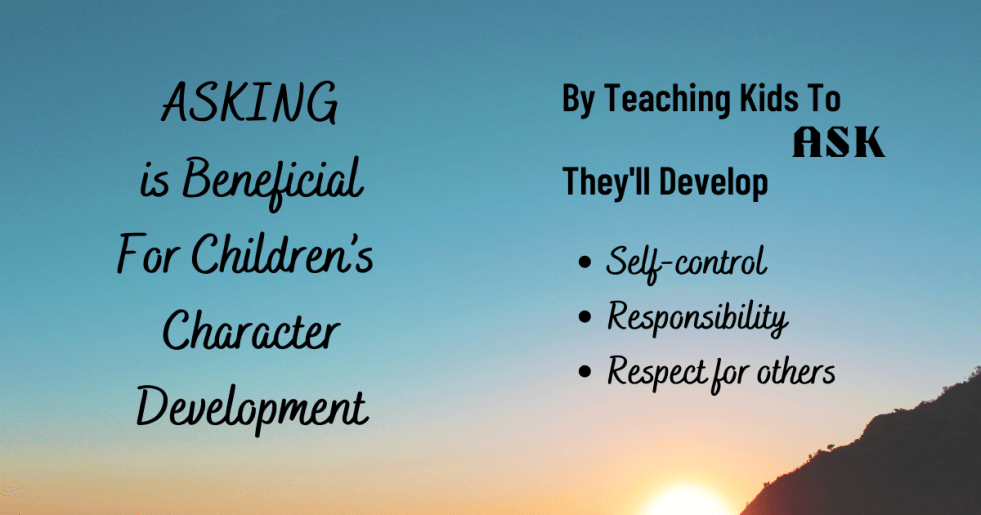
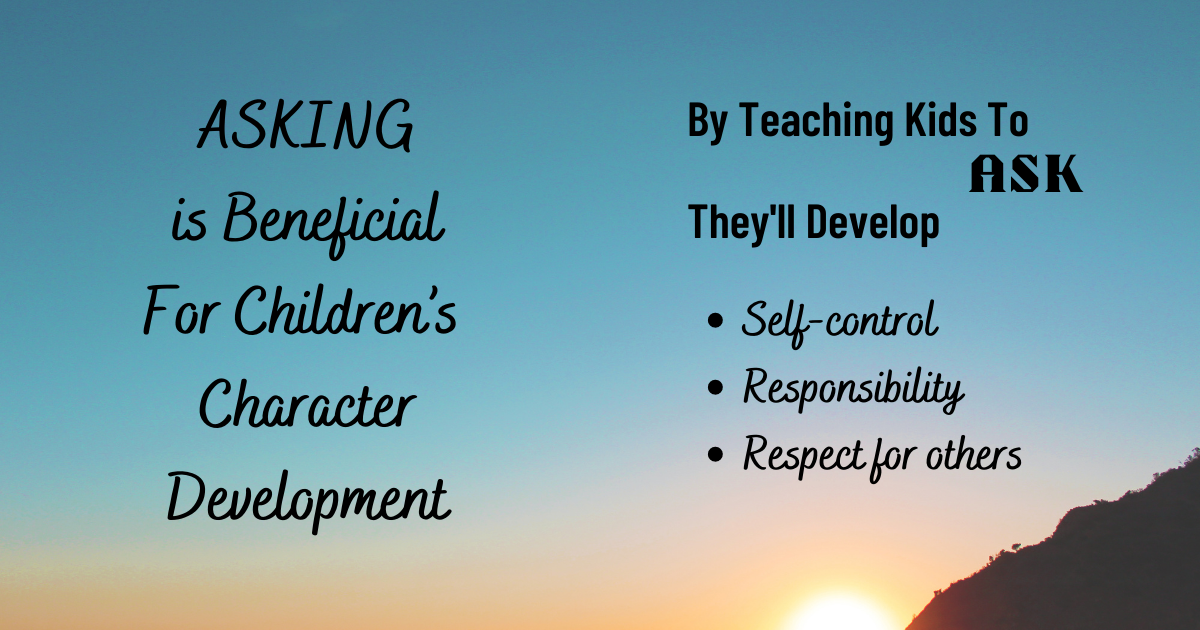
  1. Self-control – Teaching a child to ask is directly teaching them how to control themselves. Asking permission begins the process of setting limits. “Can I go out to play?” (Not now, you haven’t finished your homework.) “May I have another piece of cake?” (Too much added sugar isn’t healthy for you.)
  2. Responsibility – The underlying concept of ‘asking permission’ is the recognition of ownership. We ask others for the use of their things because we understand that those things belong to someone else. Furthermore, we have our own things that we are responsible for. Asking ultimately makes us responsible owners… We learn to ‘take care of our things’ once we are taught to appreciate our own possessions. “Can I play with your Legos?” (Okay, but don’t throw them all over my room.) This could be an example of two children who have been taught to recognize the value of ownership and the importance of asking permission.
  3. Respect for Others – Teaching children to ask is teaching children to be respectful for the rights of other people. At the end of the day… whether we agree or disagree with the actions of our friends, neighbours, etc… it becomes secondary to their rights of ownership (the items they own and the stipulations they place upon their belongings, or their thoughts, views, opinions, and beliefs). Being respectful is a valuable character trait that is undeniably appreciated the world over.

In summary

Teaching kids to ask is the responsibility of adults. It’s an easy concept to incorporate in daily life. “Did you ask me if it was okay to shove your dirty socks under the bed instead of the laundry hamper?” Add a lengthy speech about odors, bacteria, and the fact that sooner or later they’ll run out of clean socks… and you’ve taught a child that asking first may be the easiest, and less annoying way, to gravitate through life.

Thanks for your visit. Please check out Children’s Fiction Books written by Suzanne Rightley on her website: suzannerightley.com