Opinions · Parenting · Society and Values

How Adult Behavior Shapes Children’s Futures

It seems we spend a lot of time discussing the inherent rights of … well … just about everyone. But what about the rights of future generations. What about children? What about their rights…

Leaving a Blueprint: Be that person

Should children not have good examples to emulate. Short answer… Yes. But then comes the point of contention, Who bears responsibility? Naturally, most everyone defaults to parents, what they do or don’t do, but is it only a parent’s responsibility?

Maybe We Should Ask Ourselves…

If children learn by example, which we know they do… are we confident that the majority of adults openly demonstrate honest, responsible, and respectful behaviors in the presence of children?

Most importantly, are they the reasonable-minded adults that all our societies need to help nurture and shape future generations?

But First… “Look in the mirror!”

So… think about it. And… let’s be… ah… reasonable in our assessments. “Are my contributions good or, well… not so good?” Admittedly, it’s not an easy thing to ponder frankly upon.

Thankfully…

Many of us manage to set positive examples for today’s children.

Kids are worth our efforts

Discussion on the important characteristics…

What is a RESPONSIBLE adult? How do you spot one?

First the definition. To be responsible means independently managing your life by taking accountability for your actions. It also means managing your finances and fulfilling your obligations.

With that in mind… Do we fall short?

  • Promise to do something but do not follow through; regularly late for appointments/events
  • Ignore safety rules; pedestrian walk signals, bike helmets, seatbelts, etc.
  • Distracted by devices when a child needs supervision/guidance
  • Overspending, disregarding financial restraints; borrowing money but delaying on paying back, impulse shopping without regard to household needs
  • Leave mess for someone else to clean; lying to avoid consequences/make excuses
  • Poor nutritional choices; excessive screen time; blaming someone else for shortcomings

What are the obvious traits of a RESPECTFUL adult?

Respectful means— accepting others for who they are. This holds true even if they are different from you. It also applies if you don’t agree with them. Respectful behavior demonstrates being polite/not interrupting others or causing disturbances.

With that in mind, do we…

  • Belittle, mock, or speak sarcastically as a means to hurt others
  • Speak in a condescending tone, sigh loudly, eye-rolling
  • Argue/shout/name-call/insult/cut in line
  • Refuse to listen/walk off in mid-conversation
  • Interrupt/talk over/act dismissive/use device while someone is talking
  • Gossip/speak poorly of others/post negative comments

How does a REASONABLE adult behave?

Defining reasonable as—having sound judgment, being fair and sensible, able to think, understand, and make decisions logically. Willing to be reasoned with/not prone to being foolish/unreasonable/defensive.

Evaluate whether or not we are able to be reasoned with…

  • Refuse to consider any other viewpoint; always needing to be right, regardless of facts
  • Making a scene in public when challenged/acting stubbornly
  • Slam door/throw things/make threats when confronted
  • Quick to retaliate/blame someone else/become physically aggressive
  • Silent treatment/refusing to have rational discussion
  • Choose to display mood swings/indulge in outbursts/cause tension or fear to escalate

Remember

A child may be watching. Fact: kids learn by the examples they see on a regular basis.

As responsible, respectful, and reasonable adults, let’s do the best we can to help future generations. It is within us to do so.

Improvement is only a decision away.

Thanks for the visit

Suzanne writes children’s fictional stories relating to health and making healthy choices.

  • Her characters are always learning how to better themselves even in the presence of unreasonableness (hehe).
  • Striving to be responsible and accountable is subtly woven into these character-driven health books. Find Suzanne’s author page on Amazon. (Granola Brea Health-nut series; Nevin Smart books; The Granola Experience)

Purchase one of Suzanne Rightley’s health-focused books for a child or children you know and care about. Positive examples come in many forms. These books may be the small contribution that helps you build the big picture for future generations.
Children's Health · Opinions · Parenting · Society and Values

Teaching Kids Kindness Through Positive Examples

Kids need to see more examples of kindness.

Our lives are often unduly influenced by the quick comments of others. The lives of our children are affected by these comments as well. Often these remarks and actions are thoughtless.

And…. without some conscious effort on our part— a sort of ‘premeditated thought’ to remain firm to our convictions— we can be swayed to engage with, or even mimic, the poor conduct of others.

This is especially true of children. Children are vulnerable and easily manipulated.

Saying it is understandable doesn’t make it right or excusable.

As adults, we ought to be able to distance ourselves from these displays of rude outspokenness. The words and actions of others do not need to become ours going forward.

As adults, we ought to be able to reason things out. Rash behavior is simply that… rash. We do not need to fuel the irresponsible behaviors by contributing some of our own.

To that end.. let’s talk children.

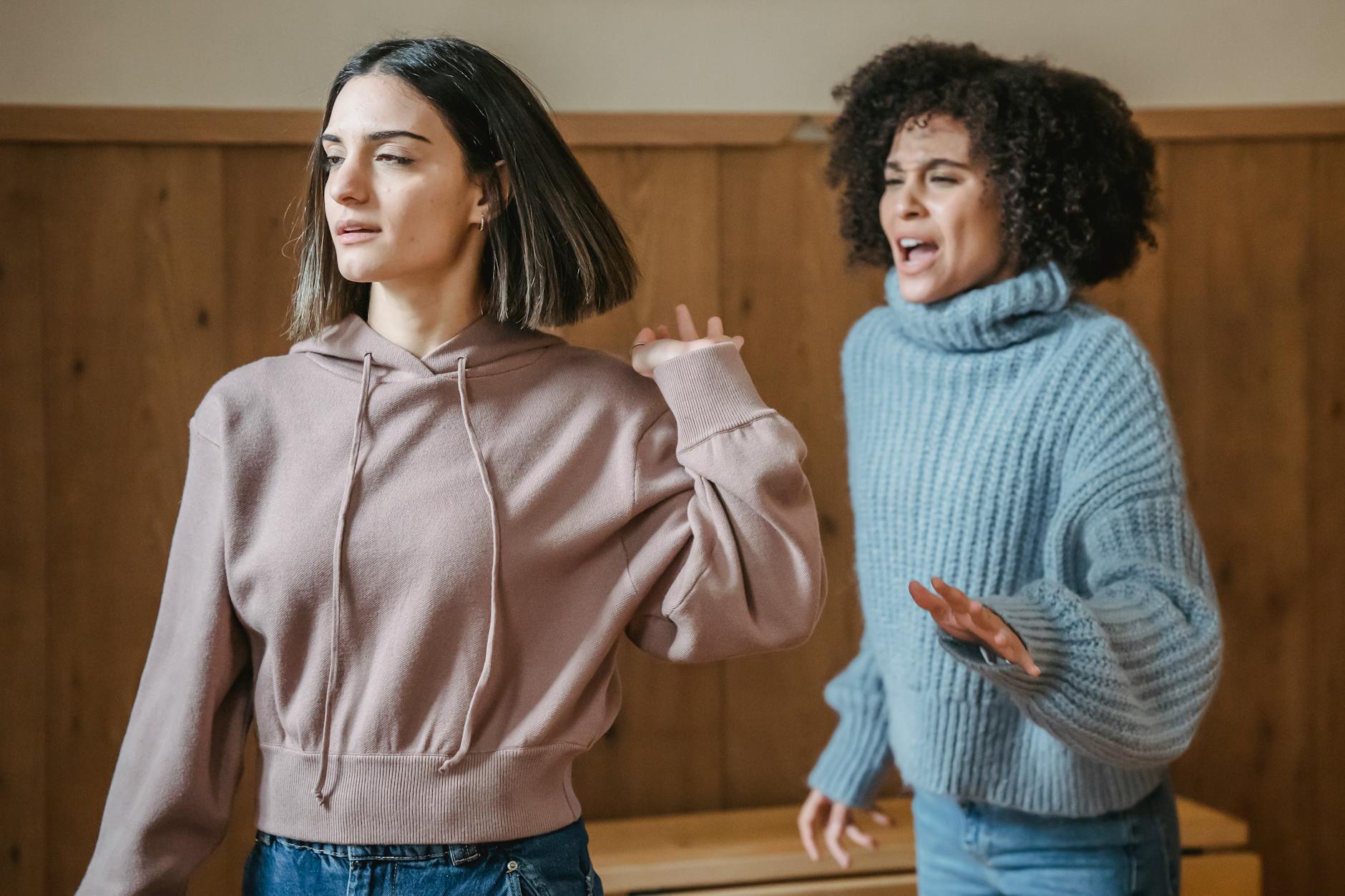
Do we want our kids to watch us act like this?

If society is inundated with displays of poor behavior, we must take action. We ought to endeavor to do more in terms of promoting good behavior.

Set the Example for our Kids

We can make an extra effort to show random acts of kindness. This is particularly important when children are watching.

As it turns out… doing well toward our fellow man produces joy that benefits our own mental and physical health.

The reality states that we cannot change the words and actions of others but we can change our own conduct. Being pleasant, being helpful, avoiding unnecessary confrontations, and keeping our opinions to ourselves, are all things we can do.

Take a moment or two to think about how you can ‘be generous’ toward someone. Give a friendly wave to that harried motorist. They waited patiently while you crossed an icy intersection.

Your easygoing gesture is a small act of appreciation on your part. It didn’t hurt you in the least… didn’t take anything from your day.

It doesn’t mean much, yet it means a lot.

Maybe… just maybe, a young child, from a passing school bus window, witnessed your thoughtful act. And… with no conscious effort on their part, absorbed a random act of kindness as ‘normal’ human behavior.

Thanks for the visit.

Suzanne Rightley authors children fiction stories. Her books provide wholesome, character driven stories for independent readers ages 10+. Find her author page on Amazon.

Children's Health · Health and Wellness · Kids Books · Lifestyle Changes · Parenting

Reviving Kids’ Love for Reading and Health

Only 1 in 3 kids, aged 8-18, say they enjoy reading in their free time. Reading — for enjoyment — is at its lowest point in 20 years. Interestingly, children’s overall health is also at it’s lowest point. (54% of US kids have at least one chronic disease)

This should come as a “canary in the coal mine” warning for parents, teachers and… children’s authors.

Furthermore… according to the National Literacy Trust… many children associate reading with endurance rather than enjoyment. Reading! A drudgery! How is that even possible?

Additionally, it’s not only about how often kids read. It’s more about a lack of motivation and emotional connection with books.

Again—as an early warning—kids losing their love for fiction indicates a larger, more serious problem. Could this issue parallel their general declining energy and health?

Question: Why is this growing lack of interest in reading, and declining health among today’s youth happening now?

Too Much Screen Time
  • Digital influences are constant distractions for kids.
  • Bite-size posts and videos provide instant gratification
  • Reading – by comparison – seem tedious and less stimulating
  • To Do: Provide structured environment. Set daily limits, establish screen-free zones (before bed, during meals, face-to-face conversation), physical screen-free-zones (kid’s bedroom), stop non-stop background TV. Encourage new habits. Promote hobbies, sports, encourage reading time. Plan family time, and get outdoors.
Too Hard to Connect With Literary Content
  • Reading feels like schoolwork
  • Books might not connect with their interests
  • Books mean searching and searching takes time and effort
  • To Do: Help kids find books on topics they like. Read aloud, even as they get older. Use, but limit time spent on audiobooks to build vocabulary.
Too Difficult/Too Frustrating
  • Reading requires comprehension and can be embarrassing or frustrating for kids who do not reach their age levels
  • Feeling overwhelmed if content is too complex for their reading abilities
  • Feel defeated before they even start
  • To Do: Let kids pick books they enjoy. Set up a quiet time to read with them. Do not criticize. Instead, celebrate achievements regardless how small. If possible create a comfortable reading space.
Too Busy
  • Kids have schedules and extracurricular activities that compete with reading time
  • Homework takes up valuable time away from reading for enjoyment
  • To Do: Keep interesting books handy. Encourage some reading as part of the bedtime routine. Use car rides as an opportunity to read. Model reading as an enjoyable moment in an otherwise busy day.

Then Factor In The Need for Kids’ Health Awareness

If we want children to understand the chronic diseases that might affect them… Then guess what? Reading is involved. Yikes.

Parents, teachers, and children’s authors must-of necessity-become much more creative.

If regular fiction is BORING and a CHALLENGE to one third of today’s kids, then how can health-awareness fit in?

Additionally, where would fitness guidance, in book-form, fit in?

To Do: Support a Developing New Genre of Fiction for Kids: Health-focused Kid Heroes

Introducing Suzanne Rightley’s Kid Heroes…

Brea

Brea, aka Granola Brea, is a 12-year-old girl who is driven by health. She aspires to become a consumer advocate when she grows up. In the meantime – she keeps busy. She writes a monthly article for her local paper. Brea holds a summer job as a camp nutrition counselor for at-risk teens. She also hosts a kids health-based podcast.

Find Brea’s Books on Amazon: Granola Brea Health-nut Series; The Granola Experience

Nevin Smarts

Nevin, aka Nerdy Nev and/or Smartypants (not his preferred nickname for obvious reasons). Nev has a high IQ. He has several distinct goals, all of which sees him attending university for a few years. In the meantime, high school is providing practical experience in promoting health to his peers. Is it smooth-sailing? Ah… not so much, but nothing keeps this health-nerd down.

Learn more about Nevin on Amazon: “Ask a Nerd” Smarts Health; “Ask a Nerd” Smarts Health Habits

Maxine

Maxine, aka Maxie is dedicated to nutrition and fitness… and for good reason. She’s healthy now – thankfully, but that wasn’t always true. Her story is in developing stages as this blog is being written. Stay tuned for her first book in 2026.

Learn more about Suzanne’s books on her author page.

Children's Health · Freedom of Expression · Parenting

The Role of Adults in Children’s Health: Instinct or Controversy?

Unhealthy children, and the longstanding, natural ability of adults to observe the signs and symptoms is on the hot seat.

Why? When did observing children’s behavior and signs of illness become controversial?

Haven’t adults always played a quiet role in safeguarding children – through instinct, observation, and care?

I don’t know when it happened, but somewhere along the way, noticing things became controversial. Huh? Especially when it comes to children. Really?

On a personal note: my first thought is my own mother. I’m glad she noticed when something was wrong and kept me home from school.

Then there were the teachers. Yeah – I think they can spot a child who is unhealthy. Thankfully, most teachers care enough to inform the parent.

That all seems normal to me.

People have been observing kids forever and making decisions along the way. Consider that children depend on adults for guidance. Adults explain the reasons they need woolly hats and mitts in the winter. They explain why children should drink extra water on hot days. Adults also ensure they look both ways before crossing the street.

But things are different now. Apparently.

Lately, even the most basic observations about children’s health seem to spark controversy.

Recently, Robert Kennedy noted that children don’t look as healthy as they used to. Gasp. He observed obese kids at the airport. Gasp. He noticed they were fixated on their devices. Gasp.

What nerve!

How dare he!

But, don’t worry… the dedicated mainstream news pointed out his outrageous behavior. They very clearly pointed out that Mr. Kennedy is NOT a medical doctor.

Maybe, the rest of us – observant adults better take heed. We are, after all, just regular folk. No medical degrees either. Gasp! We might have some common sense – but, that doesn’t count. As. We. All. Know!!!

Hi… My name is Suzanne. I write middle-grade health fiction stories. I aim to encourage kids to make better, healthier choices for themselves through light and lively narratives.

The topics covered are serious – as they relate to chronic childhood diseases – however, the format is entertaining.

Through humour, outrageous predicaments, and… ah… a few health nerdy clashes, children learn about the issues. Most importantly, they learn how they can improve their own health habits.

To learn more about my books visit my author page on Amazon.